Last updated November 21, 2026
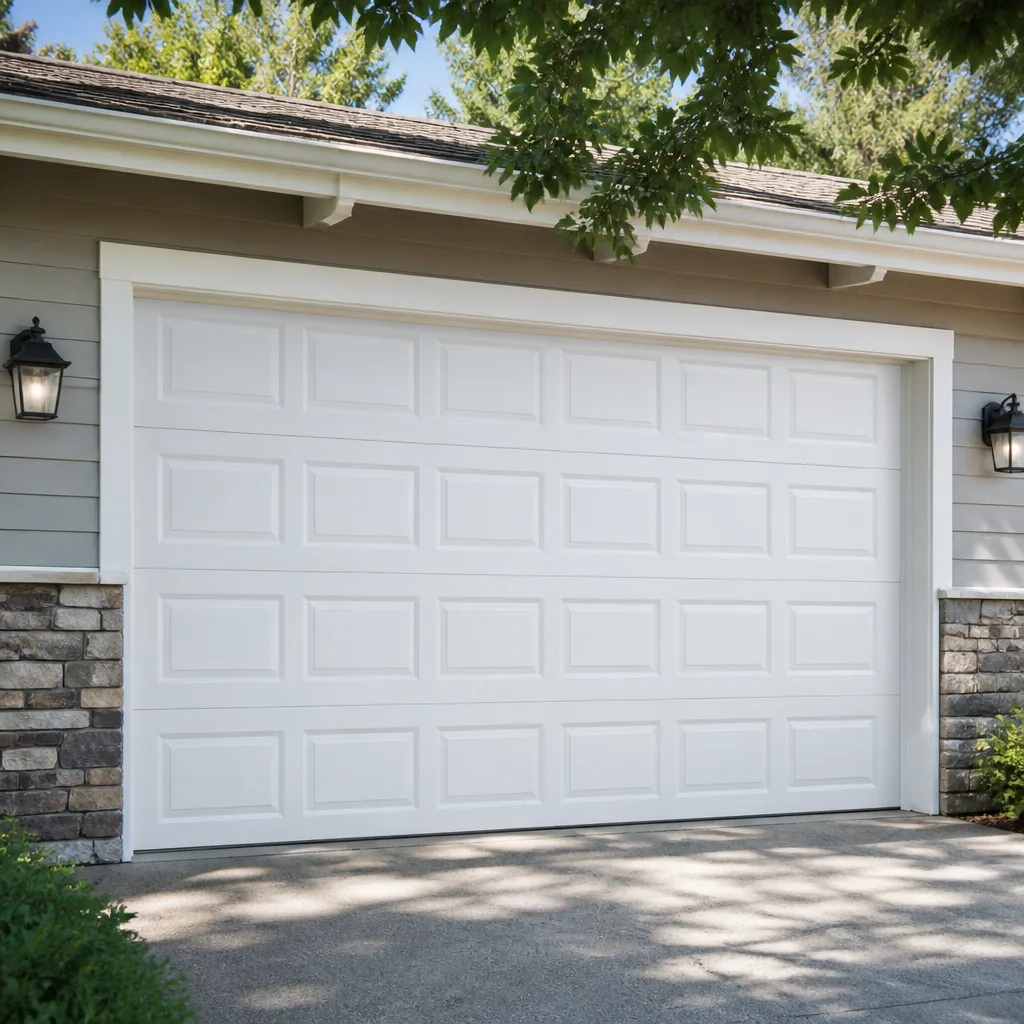 Raised-panel steel
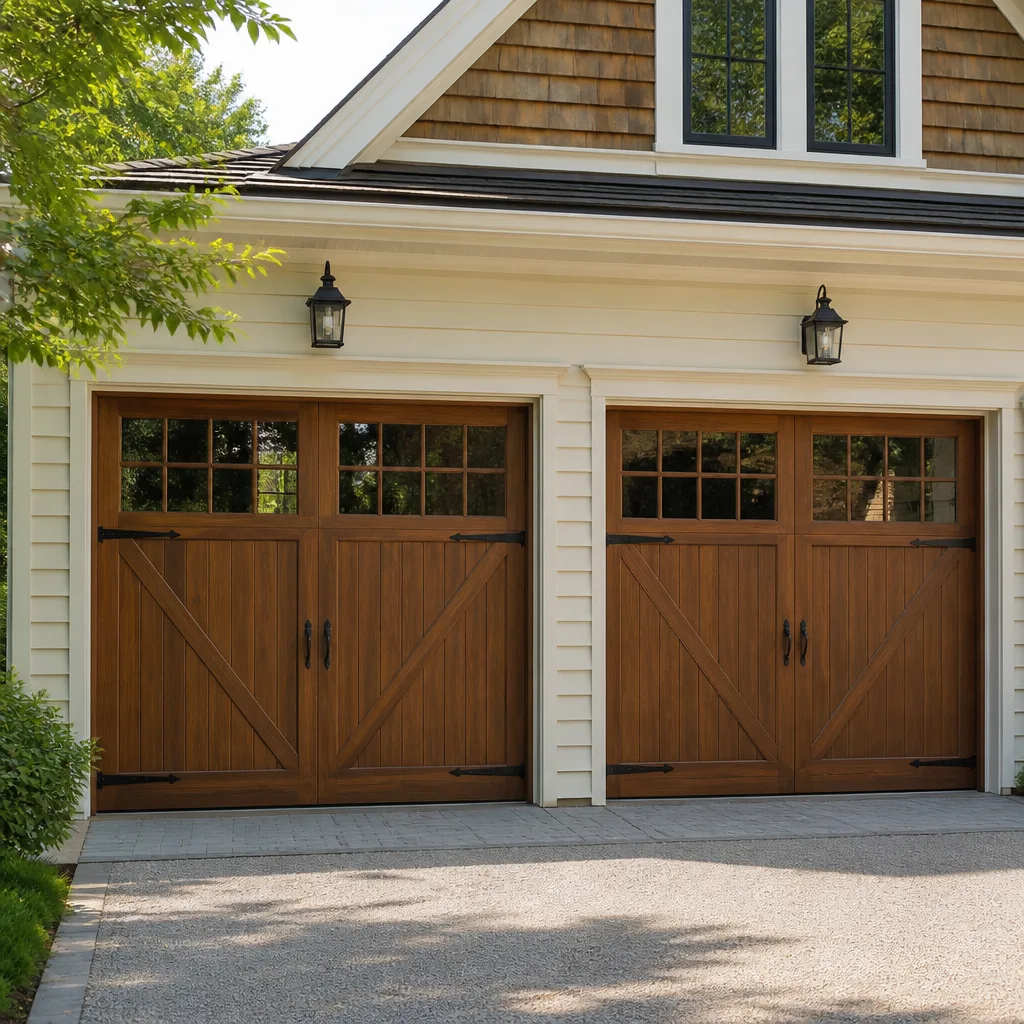 Carriage house
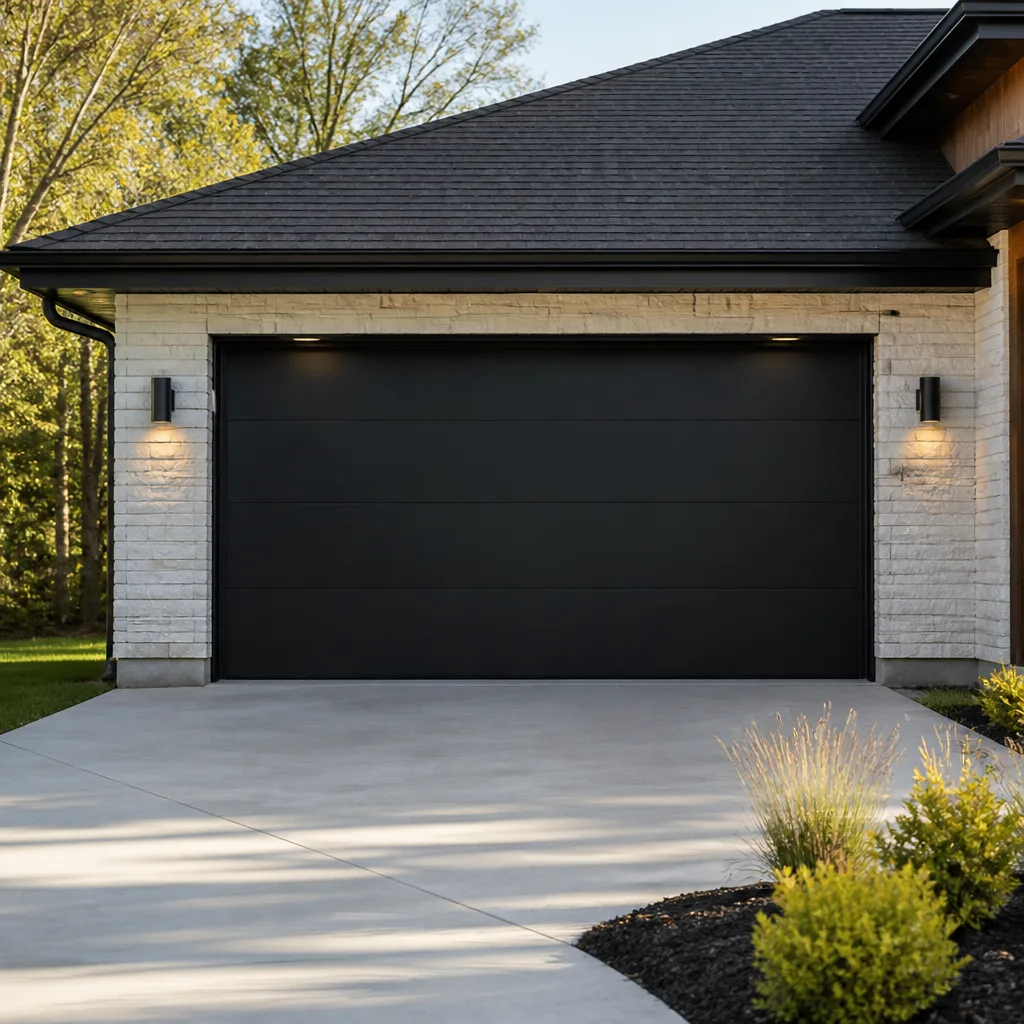 Modern flush
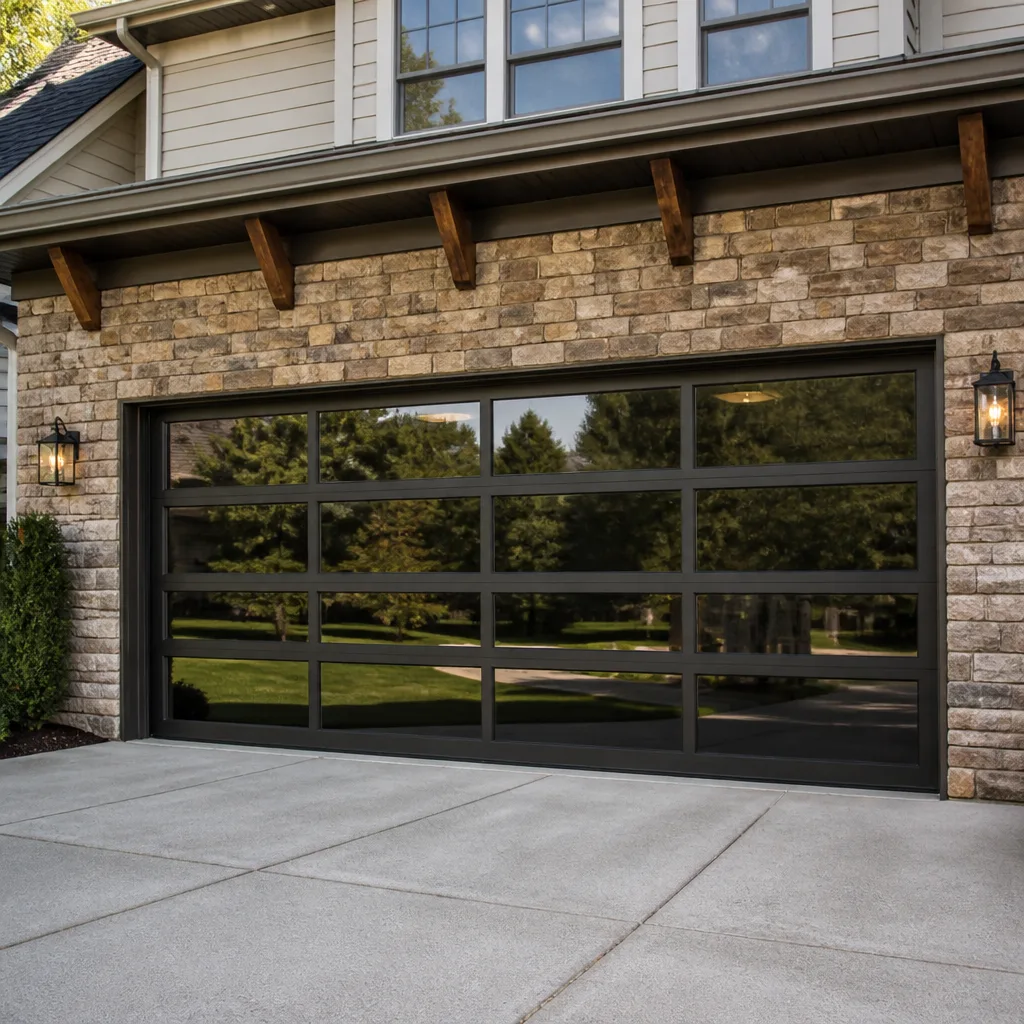 Full-view glass
 LiftMaster openers
 Chamberlain openers
Full 25-point door and opener safety check with every visit - springs, cables, rollers, tracks, and your LiftMaster or Chamberlain opener included
You get a price before we start. It does not change when the pro arrives.
Get your free estimateSeasonal Garage Door Care for Cedonia: Year-Round Homeowner’s Guide
Most homeowners in Cedonia assume their garage door is most likely to fail in the dead of winter, when the cold feels harshest. In our experience, the opposite is closer to the truth: spring is when springs actually snap. Metal contracts under weeks of cold, then expands fast when Maryland temperatures swing back and forth, and that repeated thermal fatigue builds quietly for years before it finally gives. This guide walks through what each Cedonia season does to your door’s moving parts and why a specific task matters, so you’re not just following a calendar but understanding exactly what you’re preventing.
Quick Answer
Garage doors in Cedonia need different care in each of the four seasons because each one stresses a different set of components. Winter thickens lubricant and drags on the opener, spring’s freeze-thaw cycle wears rollers and hinges, summer heat trips opener thermal cutoffs and loosens weatherstripping, and fall is your window to inspect everything before the first freeze. Keep a simple maintenance log and address irregularities early and you’ll catch most failures before they strand your car.
Styles & brands we work with
- Raised-panel steel
- Carriage house
- Modern flush
- Full-view glass
- LiftMaster openers
- Chamberlain openers
Table of Contents
- Why Cedonia’s Climate Creates Four Distinct Stress Cycles
- Winter: Cold, Thick Grease, and the Slow Drag on Your Opener
- Spring: The Freeze-Thaw Season That Breaks Springs
- Summer: Heat, Thermal Cutoffs, and Weatherstripping Failure
- Fall: The Pre-Winter Inspection Sequence
- Building a Maintenance Log That Spots Trends Before Failures
- The Cedonia Month-by-Month Maintenance Guide
- Common Mistakes to Avoid
Why Cedonia’s Climate Creates Four Distinct Stress Cycles
A garage door isn’t a single mechanism. It’s a system: springs, cables, hinges, rollers, tracks, weatherstripping, and an opener that ties it all together. Each part responds to temperature and moisture differently, and Cedonia sits in a climate that pushes all of them through a wide swing across the year. That’s what makes seasonal care here more than a nice-to-have checklist. Each season loads a different part of the system, and left unattended the wear compounds.
Here’s the core idea to hold onto: the door’s smooth operation depends on the parts moving freely and staying in tolerance. Cold stiffens things. Heat softens them. Moisture and freeze-thaw cycles work hinges and rollers loose. Get ahead of each one and you’ll spend far less on repairs over the life of the door.
In Cedonia we’ve seen the same pattern play out on driveways across the area. A door that ran quietly in October starts groaning by January because nobody thought about lubricant viscosity. A spring that survived two winters snaps on the first warm day of April. These aren’t random failures. They’re predictable, and most are preventable with the right tasks done at the right time.
The rest of this guide maps a task to each season and explains the mechanical reason it matters. If a part is already failing, the fastest path is to have it looked at – our Garage Door Repair Cedonia page covers how a typical visit works.
Winter: Cold, Thick Grease, and the Slow Drag on Your Opener
Winter is the season that quietly shortens the life of your opener. Here’s why: the grease and lubricant on your springs, rollers, and hinges are formulated to flow at room temperature. When the mercury drops below freezing, that same grease thickens, and thick grease means more resistance for the opener to overcome every time the door moves. The motor runs longer and hotter on every cycle, and that constant extra load adds up over a season.
The fix isn’t to smother the moving parts in more grease. Over-greasing in cold weather makes the drag worse. Instead:
- Use a light, cold-rated lubricant on springs, hinges, and rollers rather than heavy chassis grease.
- Wipe away old, gummy lubricant before applying fresh; a clean surface holds a thin film better than a thick smear.
- Listen for the opener straining or the door moving in fits and starts. That’s the sound of resistance, not normal operation.
- Check that the door is balanced – if you disconnect the opener and the door doesn’t stay roughly halfway up on its own, the springs and opener are fighting each other.
Winter is also when frozen ground and stiff weatherstripping can make a door stick at the bottom. If the door meets resistance at the floor, the opener keeps pushing and the strain lands on the motor. LiftMaster and Chamberlain openers in particular have safety features that reverse the door when they sense obstruction, which is protective but also means a door that sticks will cycle awkwardly until the resistance is cleared.
The single most important winter task is to reduce friction before the opener has to fight it. A few minutes with the right lubricant on a mild day saves wear the whole season. If your opener is already laboring, it may be closer to failure than friction alone explains, and that’s the moment to look at garage door opener repair rather than wait for it to quit entirely.
Spring: The Freeze-Thaw Season That Breaks Springs
Spring is when garage door torsion springs actually break, and the reason is thermal fatigue, not cold. Through winter, the steel in your springs sits contracted and stressed. As Cedonia warms up, the metal expands, and the freeze-thaw cycle of early spring swings temperatures back and forth repeatedly. That expansion-contraction cycling works on the steel at the microscopic level, and after enough cycles over enough years, a spring snaps. This is why a door that worked all winter suddenly fails on a 65-degree April afternoon.
The freeze-thaw cycle does similar damage to rollers and hinges. Moisture works its way into the seams of hinges and the bearings of rollers, then freezes and expands overnight, then thaws during the day. That expansion loosens tolerances and accelerates wear. In this region, freeze-thaw is the primary driver of roller and hinge failure, not simple use.
Spring tasks worth doing:
- Look at the springs for visible gaps or a noticeable curve – a spring with a gap has broken, and the door should not be operated until it’s fixed.
- Listen to the rollers. A rumbling or grinding sound as the door moves signals worn bearings.
- Check each hinge for play or looseness and tighten mounting bolts that have worked loose from the seasonal cycling.
- Roll the door up and down by hand (with the opener disconnected) to feel for rough spots or binding.
One safety note that matters more than any task on this list: torsion springs are under enormous tension and are genuinely dangerous to touch. Never try to adjust, wind, or replace a spring yourself. A trained technician handles this work with the right winding bars and safety procedures. When a spring fails, our garage door repair team treats it as priority work because a broken spring means the door can’t be opened safely.
Spring is also when we get the most calls about a door that opens partway and stops or one side that’s higher than the other. Both usually trace back to a spring that’s lost tension or a cable that jumped. If that’s your situation, don’t force the door; the mechanism needs to be looked at before something else fails under the strain.
Summer: Heat, Thermal Cutoffs, and Weatherstripping Failure
Summer’s stress lands on two areas: the opener motor and the weatherstripping. On the opener side, heat pushes motors toward their thermal cutoff. Most modern openers, including LiftMaster, Chamberlain, and Genie units, have a built-in thermal protection that shuts the motor down when it gets too hot, especially after repeated cycles on a hot afternoon. If your door suddenly stops responding on a hot day and works again later once things cool, that’s the thermal cutoff doing its job, not necessarily a dead opener.
The real risk is what the repeated cutoffs tell you. A motor that overheats easily on warm days is often working harder than it should because of friction, a failing capacitor, or an unbalanced door. Heat exposes a problem the cooler months were masking. Don’t ignore a door that only struggles on hot days – it’s giving you warning.
Weatherstripping is the other summer casualty. The rubber or vinyl seal along the bottom and sides of the door is glued or fastened in place, and summer heat softens both the seal and its adhesive. Over time the weatherstripping sags, pulls away, or cracks. When it fails, you lose the seal that keeps out drafts, pests, and rain, and the door can start to rattle against its frame. Check the bottom seal for tears and the sides for sections pulling loose.
Summer tasks:
- Test the auto-reverse safety feature monthly – place a small object in the door’s path and confirm it reverses on contact.
- Inspect the bottom weatherstripping for cracks, tears, or sagging sections.
- Keep the opener’s vents clear and the motor housing free of dust and cobwebs so it can shed heat.
- Watch for a door that only misbehaves on hot afternoons – that’s a friction or heat-sensitivity signal worth investigating.
If the opener keeps tripping its thermal cutoff even when the door moves freely, the unit itself may be the problem. Our garage door opener repair service works on Genie and Chamberlain systems specifically, and diagnostic time is shorter when we know the brand.
Fall: The Pre-Winter Inspection Sequence
Fall is your best window to catch problems before winter loads the system. Do the inspection in order of consequence, because not every issue is equally urgent and you don’t want to spend time on cosmetics while a safety-critical part is failing.
Here’s the sequence we recommend:
- Springs and cables first. These are the highest-consequence parts. Look for gaps in springs and fraying or slack in cables. If anything looks off, stop and call a professional.
- Balance and alignment. Disconnect the opener and lift the door halfway. It should stay put. If it drops or rises on its own, the springs are out of adjustment.
- Safety reverse test. Confirm the door reverses when it meets an obstruction and that the photo-eye sensors are aligned and clean.
- Rollers and hinges. Check for wear, looseness, and dryness. Lubricate lightly before winter thickens things up.
- Tracks. Look for bends, dents, or debris. A track knocked slightly out of alignment adds friction the opener has to fight all winter.
- Weatherstripping and bottom seal. Confirm the seal still contacts the floor evenly and the side seals are intact to keep out cold and moisture.
- Opener. Listen to the motor, check the force settings, and note any change in sound.
Do this once in fall and you’ve cleared the issues that would have become winter emergencies. In Cedonia, the temperature swings between October and December are wide enough that a door that passes this inspection in early fall is well positioned for the cold. Fall is also a natural time to think about whether a door that needs constant adjustment is simply nearing the end of its reliable life – if repairs start stacking up, garage door installation may make more sense than another fix.
Building a Maintenance Log That Spots Trends Before Failures
A maintenance log turns guesswork into pattern recognition. The point isn’t to jot down random notes; it’s to record the same handful of observations each month so you can spot a trend before it becomes a failure. A sound that slowly gets louder, a door that gets a little slower each week, or a spring that starts looking slightly different are all trends a log catches and memory doesn’t.
Here’s what to record, and it takes only a few minutes:
- Date and temperature of each check. Temperature matters because many issues are seasonal and you’ll want to know whether a problem appeared on a cold day or a hot one.
- Sound notes. “Quiet,” “slight rattle,” “grinding on left side” – plain descriptions are enough. Change over time tells the real story.
- Operation speed and smoothness. Note whether the door moves steadily or in fits. A door that gradually gets jerkier is telling you something.
- Visual checks. Spring condition, cable condition, roller wear, weatherstripping condition, and any loose hardware. A quick “never changed / changing / needs attention” marks each.
- Opener behavior. Any thermal cutoffs, odd sounds, or remote issues. Note the date and conditions.
- Work done. Lubrication, tightening, parts replaced, with the date. This is what lets you see how long a part actually lasted.
After a year of entries, you’ll have a record specific to your door and your Cedonia driveway. When something does break, you can tell a technician exactly when it started and under what conditions – which shortens diagnosis. That specificity is worth more than it sounds. A log that shows “grinding started in November and got worse through January” points straight at a roller problem instead of leaving a technician to start from scratch.
Keep the log somewhere you’ll actually use it, like a notebook on a shelf in the garage, and update it during your seasonal checks. The habit pays off in the first year.
The Cedonia Month-by-Month Maintenance Guide
If you prefer a simple calendar to a log, here’s the same seasonal advice broken into the year. Treat it as a starting point, and adjust based on what your own door tells you.
January and February (deep winter). Focus on friction. Keep the light cold-rated lubricant on the moving parts, listen for the opener straining, and clear any ice or snow buildup around the bottom seal so the door doesn’t bind. Avoid heavy greasing.
March and April (spring swing). This is your highest-alert window for spring failure because of thermal cycling. Inspect springs and cables visually, listen for new noises, and check hinges for looseness. If a spring shows a gap, stop operating the door and call for spring repair.
May and June (warming up). Run the safety reverse test, check the weatherstripping for the first signs of summer heat damage, and clear debris from the tracks. Watch whether the door starts behaving differently on hot afternoons.
July and August (peak heat). Pay attention to the opener. Thermal cutoffs are a signal, not just an annoyance. Inspect the bottom seal for cracks and sagging, and keep the motor housing clear so it can shed heat.
September and October (pre-winter). Do the full fall inspection sequence in order of consequence: springs and cables, balance, safety reverse, rollers and hinges, tracks, weatherstripping, then the opener. This is when you catch problems before winter makes them worse.
November and December (first freeze). Confirm everything from the fall inspection holds up as temperatures drop, switch to cold-rated lubricant, and test the door’s operation on the first cold mornings while you’re paying attention.
You’ll notice the guide follows the same logic as the seasons themselves: reduce friction in cold, watch for spring fatigue in the thaw, manage heat in summer, and prepare thoroughly in fall. The calendar just makes it easier to remember.
Common Mistakes to Avoid
- Over-greasing in winter. More grease feels protective but thick grease adds drag and heats the opener motor. A thin, cold-rated film is better than a thick smear in cold weather.
- Treating spring failure as a winter problem only. In Cedonia, springs most often break in spring because of thermal cycling, so the season to watch hardest is the thaw, not the deep freeze.
- Trying to fix a torsion spring yourself. One of the most dangerous tasks in the trade. Even careful homeowners get seriously hurt. Leave springs to trained technicians.
- Ignoring the thermal cutoff. A door that only trips on hot days is warning you about friction or heat sensitivity. Dismissing it leads to a dead opener at the worst time.
- Skipping the fall inspection. Many winter emergencies were visible problems in October. A single fall inspection clears most of them.
- Neglecting weatherstripping. A cracked or sagging seal lets in moisture that accelerates freeze-thaw wear on hinges and rollers, so a cheap seal can cause pricey damage.
- No log, no pattern. Without a record, a gradually loud door sounds “the same as always” until it fails. Track changes and you’ll catch them earlier.
See the difference
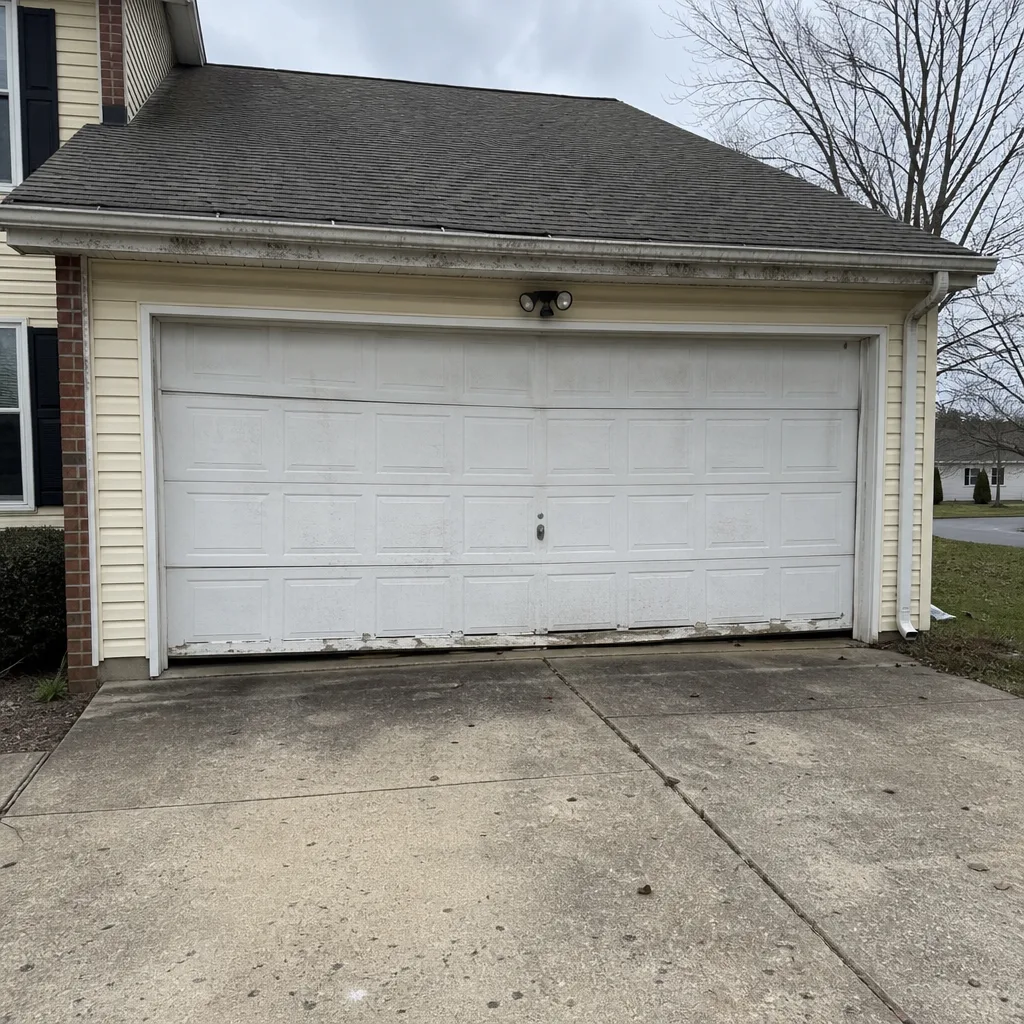 Before
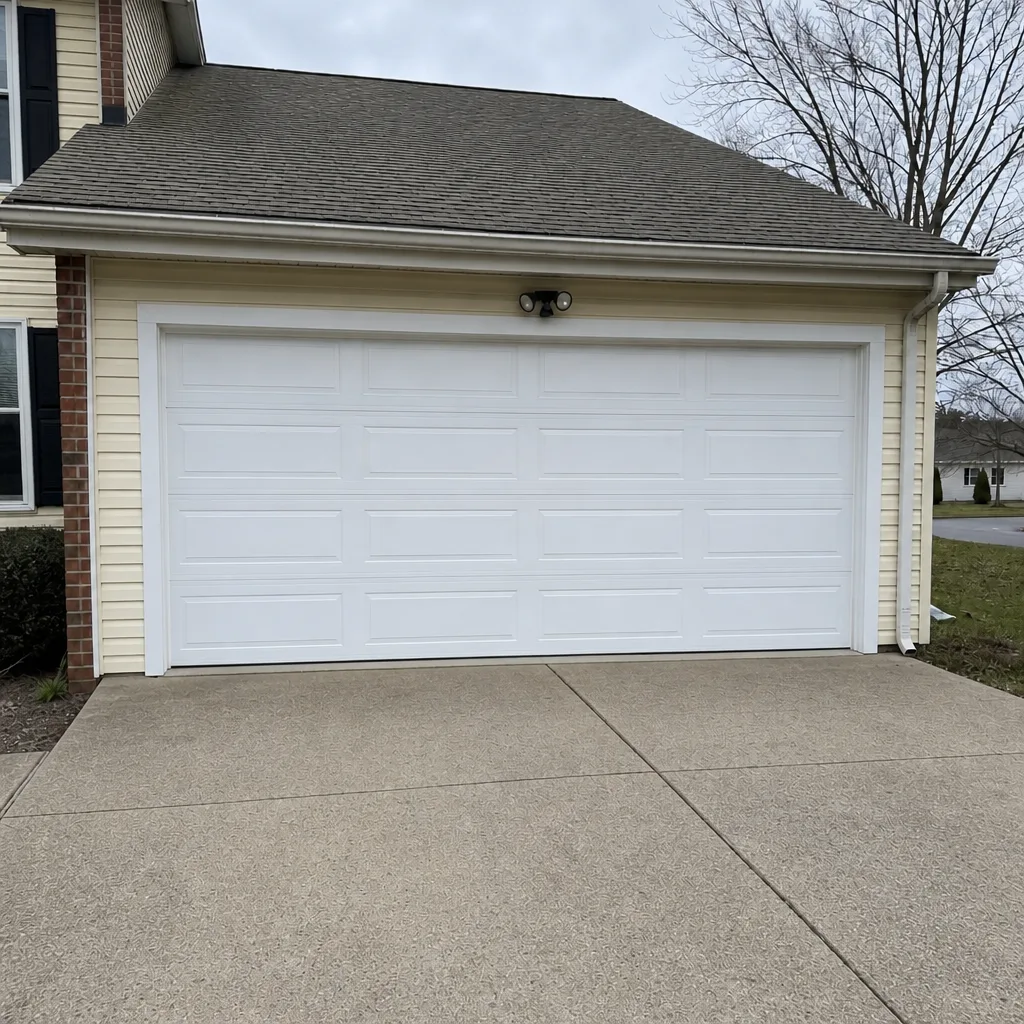 After
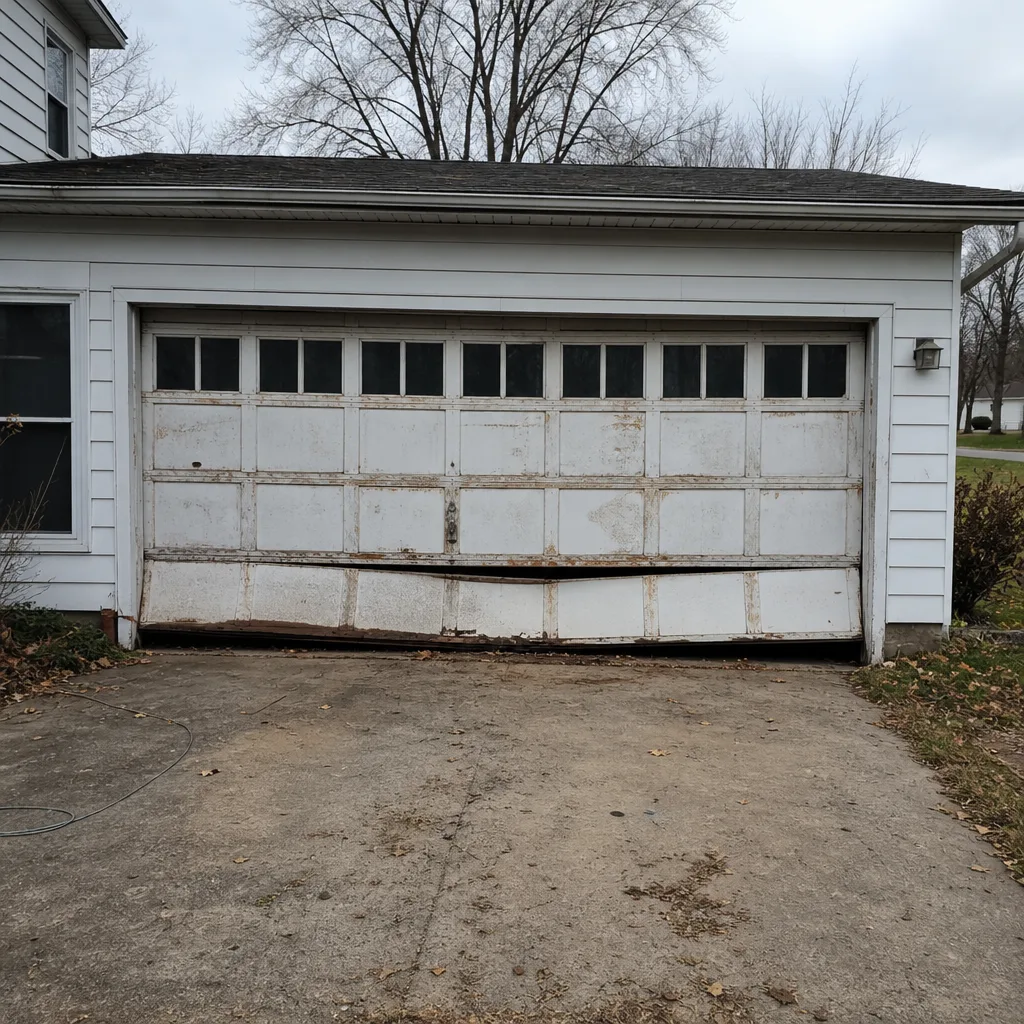 Before
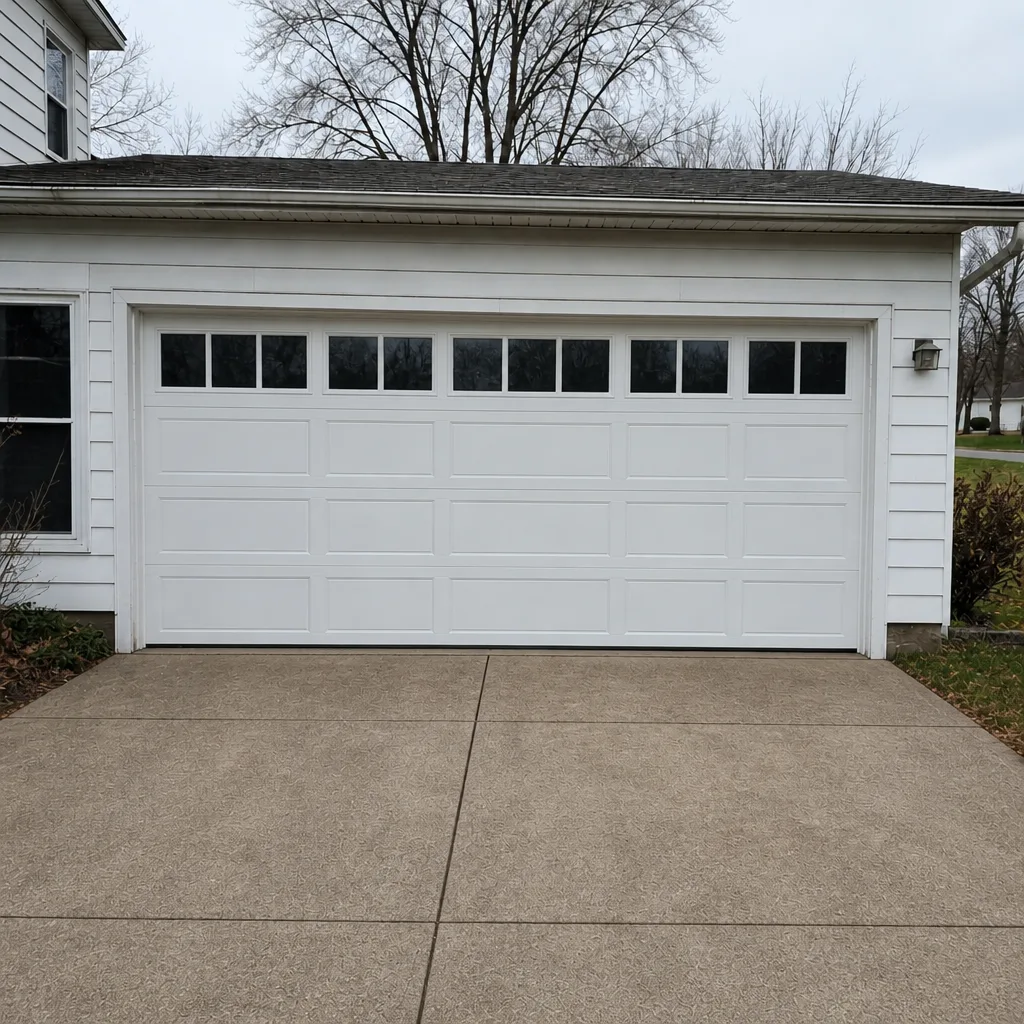 After
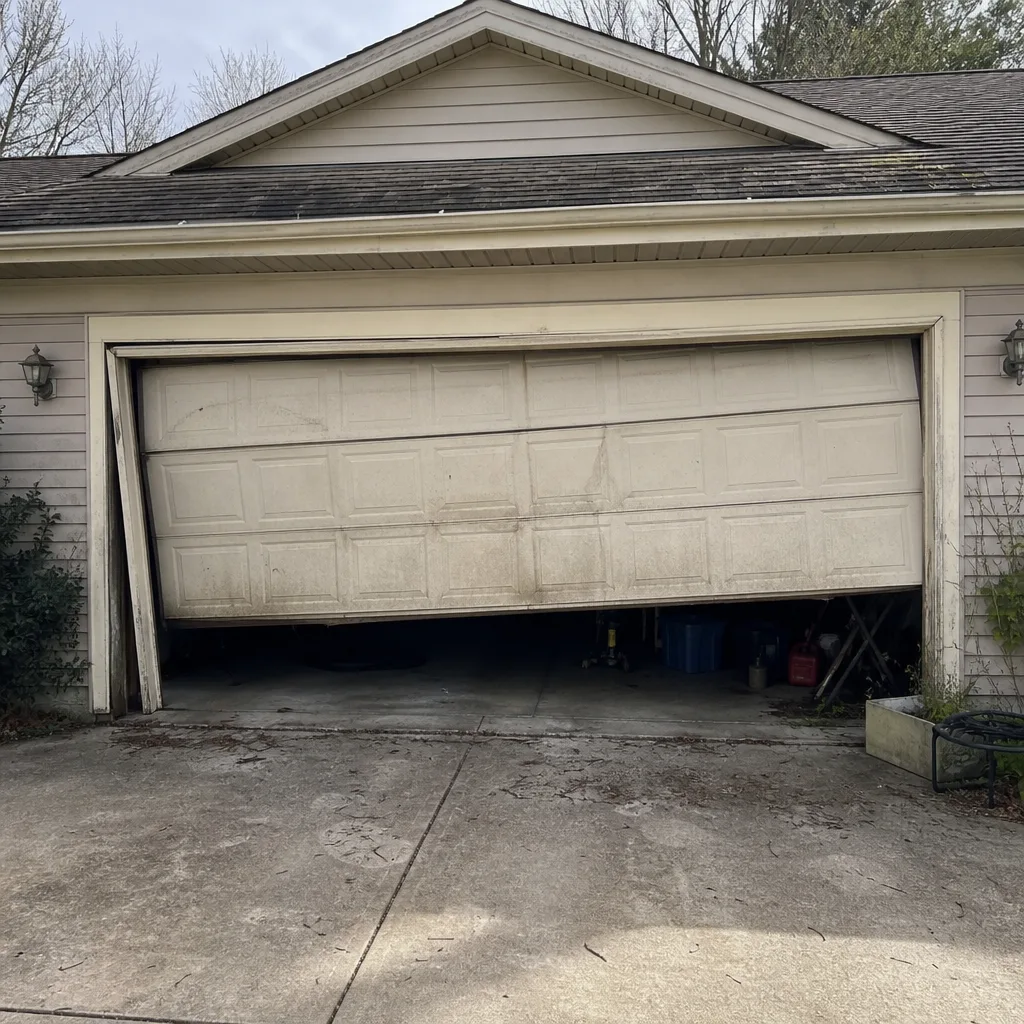 Before
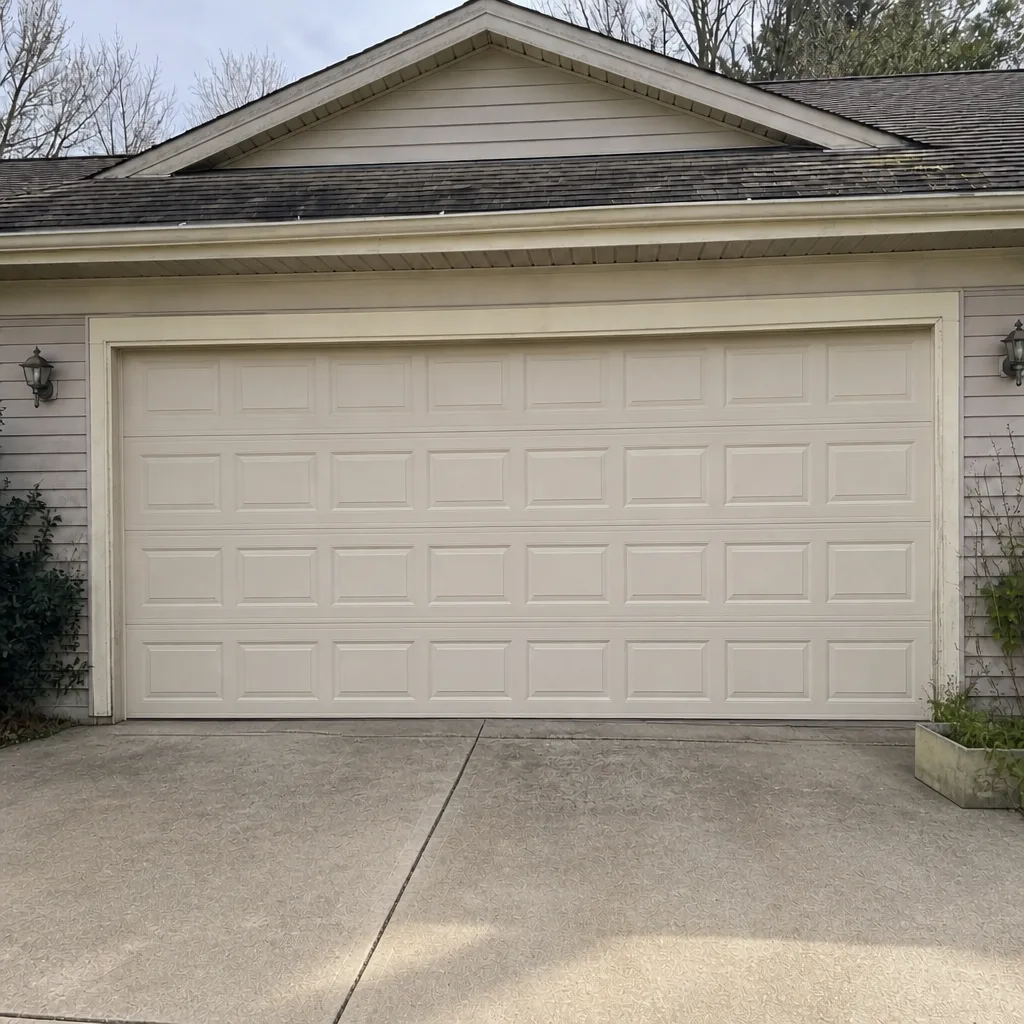 After
When to Call a Professional
Most seasonal care is safe for a homeowner to handle: lubricating, cleaning, visual inspection, and running safety tests. But some situations call for a trained technician without delay. A spring that shows a visible gap or a sudden loss of tension, a cable that’s frayed or come off its drum, a door that’s hanging crooked or won’t stay balanced, or any situation where the mechanism is under tension and acting unpredictably – those are professional territory. So is a door that jams partway, a track that’s been bent out of alignment, or an opener that’s tripping its cutoff repeatedly or failing on any brand from LiftMaster to Raynor. Garage Door Repair Cedonia offers free estimates in Cedonia – call (844) 918-2827 and we’ll tell you what’s going on and what it takes to put it right. Our technicians have up to 14 years of experience, and we work on the brand already in your garage.
Frequently Asked Questions
Do a quick visual check and light lubrication monthly, and a deeper seasonal inspection at each change of season, with the fall inspection being the most thorough. Spring-adjacent checks matter most in Cedonia because thermal cycling is the main driver of spring failure. Call (844) 918-2827 if anything looks off during your checks – estimates are free.
Yes, but use a light, cold-rated lubricant rather than heavy grease. Cold thickens standard grease and adds drag that heats the opener motor. Wipe away old gummy lubricant first, then apply a thin film to springs, hinges, and rollers. If your opener is already straining in cold weather, call (844) 918-2827 to have it looked at.
No. Torsion springs are under extreme tension and a mistake can cause serious injury. Springs should only be adjusted or replaced by trained technicians using proper winding bars and safety procedures. If a spring shows a gap or the door won’t stay balanced, stop operating it and call (844) 918-2827 for spring repair – estimates are free.
The spring thaw is the biggest risk, because the freeze-thaw cycle and thermal expansion cause springs to snap more often in early spring than in winter. Freeze-thaw also wears rollers and hinges. Watch especially during March and April, and call (844) 918-2827 if you notice a change.
Yes, in two ways: heat can trip the opener’s thermal cutoff and it softens and loosens weatherstripping. A door that only struggles on hot days is warning you about friction or heat sensitivity. If your opener keeps cutting out, call (844) 918-2827 to schedule a diagnostic – estimates are free.
We offer emergency garage door service beyond standard business hours, and we treat safety-critical issues like a broken spring or a door that’s stuck as priority work. Call (844) 918-2827 right away so we can assess the situation and get you back to working order as quickly as possible.
The Bottom Line
Cedonia puts your garage door through four genuinely different stress cycles, and each one wears a different set of parts. Winter thickens lubricant and taxes the opener, spring’s freeze-thaw cycle breaks springs and loosens rollers and hinges, summer heat trips thermal cutoffs and softens weatherstripping, and fall is your window to inspect before the cold arrives. The secret isn’t a complicated routine – it’s doing the right task at the right time and keeping a simple log so you spot trends early. Handle what you can safely, leave springs and cables to trained technicians, and your door will give you years of reliable service. When you need help, call Garage Door Repair Cedonia at (844) 918-2827 for a free estimate.
Written by the team at Garage Door Repair Cedonia.